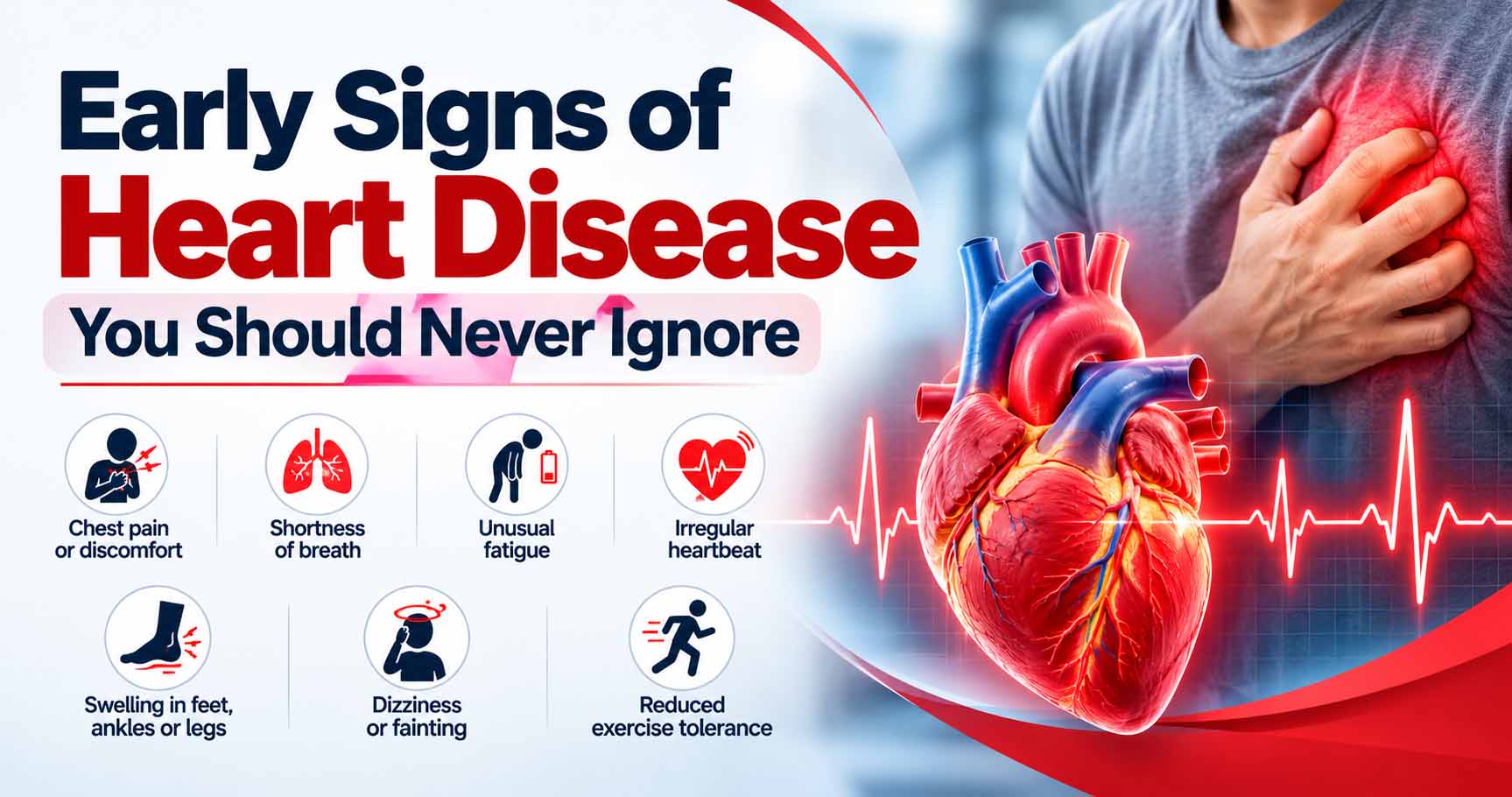
Early Signs of Heart Disease You Should Never Ignore
Heart disease is a major health concern affecting people of different ages. Although some heart conditions develop without noticeable symptoms, others may produce early warning signs that should not be ignored.
Recognizing possible heart disease symptoms can help individuals seek timely medical evaluation and understand the importance of maintaining cardiovascular health.
Symptoms such as chest discomfort, shortness of breath, unusual fatigue, and irregular heartbeats may have several causes, including heart-related conditions. Understanding these warning signs is an important part of protecting your health.
1. Chest Pain or Discomfort
Chest discomfort is one of the most recognized warning signs of certain heart conditions.
It may feel like:
- Pressure or tightness in the chest
- A squeezing or heavy sensation
- Discomfort during physical activity
- Pain spreading to the arms, neck, jaw, or back
Chest pain does not always indicate heart disease. However, new or unexplained chest discomfort should be medically assessed.
Important: Chest discomfort that is persistent, recurring, or accompanied by breathlessness, sweating, or faintness may indicate a heart attack and requires immediate emergency medical attention.
2. Shortness of Breath
Breathlessness during routine activities can sometimes indicate an underlying cardiovascular problem.
You may notice difficulty breathing while walking, climbing stairs, or performing activities that previously felt comfortable.
Some heart conditions can affect the heart's ability to pump blood effectively, contributing to breathlessness.
However, respiratory conditions, anemia, and other health problems can also cause similar symptoms.
Persistent or worsening breathlessness should not be ignored.
3. Unusual Fatigue and Weakness
Feeling tired after physical activity is normal. However, persistent or unexplained fatigue may sometimes be associated with heart disease.
Possible warning signs include:
- Feeling exhausted after minimal activity
- Reduced ability to perform everyday tasks
- Unusual weakness without an obvious reason
- Fatigue accompanied by breathlessness
Fatigue alone does not confirm a heart problem. Medical evaluation can help identify possible causes.
4. Irregular or Rapid Heartbeat
A noticeable change in heartbeat is often described as a palpitation.
Some people experience:
- A racing heartbeat
- A racing heartbeat
- Skipped or irregular beats
- Sudden episodes of a pounding heartbeat
Palpitations may occur due to stress, caffeine, physical activity, or heart rhythm disorders.
If palpitations are frequent, persistent, or accompanied by dizziness, chest pain, or fainting, medical assessment is important.
5. Swelling in the Feet, Ankles, or Legs
Swelling in the lower limbs can sometimes be associated with heart failure.
When the heart is unable to pump blood efficiently, fluid may accumulate in different parts of the body.
Possible symptoms include:
- Swelling around the ankles
- Swollen feet or lower legs
- Unexplained weight gain from fluid retention
- Breathlessness associated with swelling
Swelling can also occur because of kidney disease, venous problems, medications, or other conditions.
A healthcare professional can help determine the underlying cause.
6. Dizziness or Fainting
Occasional dizziness can result from dehydration, low blood pressure, or other common causes.
However, repeated dizziness or fainting may sometimes indicate an abnormal heart rhythm, a heart valve problem, or another cardiovascular condition.
Sudden loss of consciousness, particularly during physical activity or with chest discomfort, requires urgent medical evaluation.
7. Reduced Exercise Tolerance
A noticeable reduction in your ability to perform everyday physical activities may be another reason to seek medical advice.
For example, walking short distances or climbing stairs may become more difficult than before.
Reduced exercise tolerance can occur with several heart and non-heart conditions. Persistent changes should be evaluated rather than automatically attributed to aging or lack of fitness.
Who May Be at Higher Risk of Heart Disease?
Certain medical conditions and lifestyle factors can increase the likelihood of cardiovascular disease.
Important risk factors include:
- High blood pressure
- Diabetes
- High cholesterol
- Smoking or tobacco use
- Family history of premature heart disease
- Physical inactivity
- Overweight or obesity
- Increasing age
Having one or more risk factors does not necessarily mean that a person has heart disease. However, understanding individual risk can support appropriate preventive care.
When Should You Seek Medical Attention?
Seek medical evaluation if you experience recurring chest discomfort, unexplained breathlessness, persistent palpitations, unusual fatigue, or reduced exercise tolerance.
Seek emergency medical assistance immediately if you experience:
- Chest pressure or discomfort suggesting a heart attack
- Pain spreading to the arm, jaw, back, or shoulder
- Severe or sudden breathlessness
- Chest discomfort with cold sweating, nausea, or faintness
- Sudden collapse or loss of consciousness
Do not wait for symptoms to become severe or attempt to drive yourself to the hospital during a suspected heart attack. Call emergency medical services.
How Can You Maintain Better Heart Health?
Healthy daily habits can help reduce the risk of cardiovascular disease.
Stay physically active: Engage in regular physical activity appropriate for your health and fitness level.
Follow a balanced diet: Include vegetables, fruits, whole grains, legumes, and other nutritious foods while limiting excess salt and unhealthy fats.
Smoking and other forms of tobacco use increase cardiovascular risk.
Monitor important health indicators: Follow medical advice regarding blood pressure, blood sugar, and cholesterol monitoring.
Manage existing conditions: Take prescribed medicines as directed and attend recommended follow-up appointments.
Maintain healthy sleep habits: Adequate sleep contributes to overall cardiovascular health.
Conclusion
Early recognition of possible heart disease symptoms can support timely medical care.
Chest discomfort, unexplained breathlessness, irregular heartbeats, persistent fatigue, and swelling in the legs should not automatically be dismissed.
Although these symptoms do not always indicate heart disease, persistent or concerning changes deserve appropriate medical evaluation.
Understanding cardiovascular risk factors and adopting heart-healthy habits are important steps toward maintaining long-term heart health.
Medical Disclaimer: This article is intended strictly for general patient education and awareness. It does not replace professional medical consultation, diagnosis, or treatment. Symptoms may have different causes, and medical decisions should be based on individual clinical assessment. In a suspected medical emergency, seek immediate emergency care.