
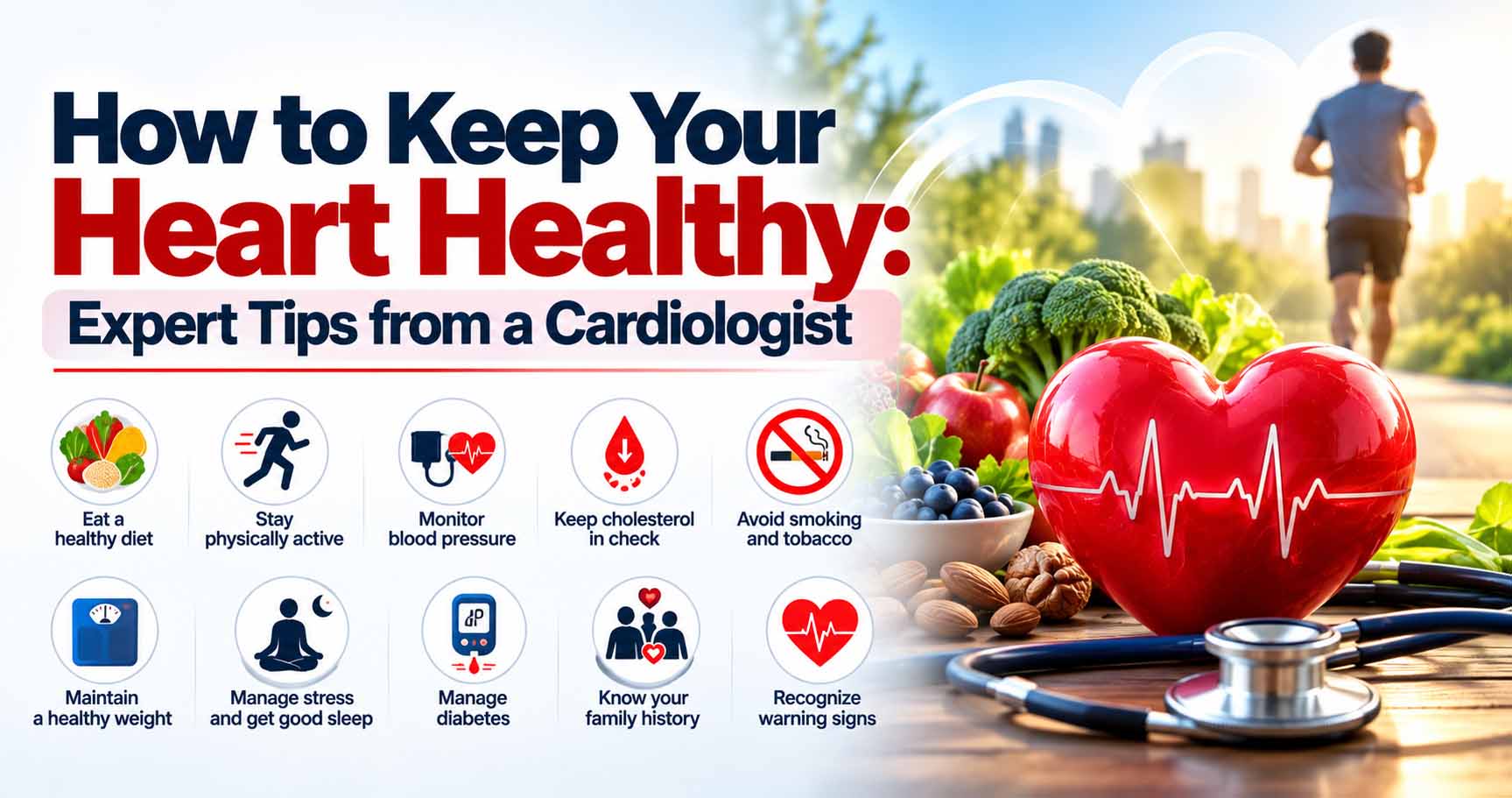
How to Keep Your Heart Healthy: Expert Tips from a Cardiologist
Heart health plays an important role in maintaining overall well-being and quality of life. Your heart works continuously to supply oxygen and nutrients throughout the body. However, unhealthy lifestyle habits, high blood pressure, diabetes, high cholesterol, and physical inactivity can increase the risk of cardiovascular disease.
The good news is that many risk factors for heart disease can be managed through healthy lifestyle choices and appropriate medical care.
Understanding how to keep your heart healthy can help you make informed decisions and support long-term cardiovascular health.
1. Follow a Heart-Healthy Diet
A balanced diet is one of the most important steps toward maintaining a healthy heart. Nutritious food choices can help manage cholesterol levels, blood pressure, blood sugar, and body weight.
Heart-healthy dietary habits include:
- Eat a variety of fresh fruits and vegetables.
- Choose whole grains such as oats, brown rice, and whole wheat.
- Include protein sources such as lentils, beans, nuts, and fish where appropriate.
- Limit foods high in saturated fats and trans fats.
- Reduce excessive salt and added sugar intake.
- Prefer home-cooked meals over frequently consuming highly processed foods.
Small, consistent improvements in daily eating habits can contribute to better cardiovascular health.
2. Stay Physically Active
Regular physical activity helps strengthen the cardiovascular system and supports healthy blood pressure, cholesterol, and body weight.
For most adults, general recommendations include at least 150 minutes of moderate-intensity aerobic activity per week, or an equivalent amount of vigorous activity, along with muscle-strengthening exercises on at least two days.
Examples of suitable activities include brisk walking, cycling, swimming, and other forms of exercise appropriate to individual fitness levels.
People with existing heart conditions or symptoms should discuss suitable exercise levels with a qualified healthcare professional.
3. Monitor Your Blood Pressure
High blood pressure, also known as hypertension, is a major risk factor for heart disease and stroke.
It often develops without noticeable symptoms, which is why regular monitoring is important.
Helpful measures include:
- Check blood pressure as advised by a healthcare professional.
- Reduce excess dietary sodium.
- Maintain regular physical activity.
- Follow prescribed treatment when necessary.
- Avoid stopping blood pressure medicines without medical advice.
Managing high blood pressure can help reduce the risk of cardiovascular complications.
4. Keep Cholesterol Levels Under Control
Cholesterol is essential for several functions in the body, but elevated levels of low-density lipoprotein (LDL) cholesterol can contribute to plaque buildup in the arteries.
Over time, this buildup may increase the risk of coronary artery disease.
A balanced diet, regular exercise, tobacco avoidance, and prescribed medicines when indicated can help manage cholesterol levels.
Cholesterol testing and treatment decisions should be based on an individual's overall cardiovascular risk.
5. Avoid Smoking and Tobacco Use
Smoking and other forms of tobacco use increase the risk of heart disease and stroke.
Tobacco exposure can damage blood vessels, contribute to arterial plaque formation, and increase the likelihood of cardiovascular complications.
Quitting smoking and avoiding secondhand smoke are important steps toward better heart health.
Individuals who find it difficult to quit may benefit from evidence-based tobacco cessation support.
6. Maintain a Healthy Body Weight
Excess body weight can increase the likelihood of developing high blood pressure, type 2 diabetes, and abnormal cholesterol levels.
Maintaining a healthy weight through balanced nutrition, physical activity, and sustainable lifestyle habits can support cardiovascular health.
Rather than following extreme diets or rapid weight-loss methods, focus on gradual and long-term changes.
7. Manage Stress and Prioritize Sleep
Persistent stress and inadequate sleep can affect overall health and may contribute to cardiovascular risk.
Healthy stress-management strategies include regular exercise, relaxation techniques, maintaining social connections, and seeking professional support when needed.
Most adults should aim for approximately 7–9 hours of sleep per night, although individual requirements vary.
Persistent sleep difficulties, loud snoring, or suspected sleep apnea should be medically evaluated when appropriate.
8. Manage Diabetes and Blood Sugar Levels
Diabetes is an important risk factor for cardiovascular disease.
Persistently elevated blood glucose can damage blood vessels and contribute to complications involving the heart, kidneys, and other organs.
People living with diabetes should follow individualized medical guidance regarding blood sugar monitoring, nutrition, physical activity, medications, and cardiovascular risk assessment.
Managing blood pressure and cholesterol is also important for individuals with diabetes.
9. Understand Your Family History
A family history of premature heart disease can increase an individual's cardiovascular risk.
Although genetic factors cannot be changed, knowing your family history can help healthcare professionals assess risk and recommend appropriate preventive measures.
Share relevant family medical history during routine healthcare consultations.
10. Recognize the Warning Signs of Heart Disease
Heart disease does not always cause noticeable symptoms in its early stages.
However, certain symptoms may indicate an underlying cardiovascular condition.
Warning signs that deserve medical attention include:
- Chest pain, pressure, or discomfort
- Shortness of breath during routine activities
- Unexplained or persistent fatigue
- Irregular or unusually rapid heartbeat
- Swelling in the feet or ankles
- Dizziness or fainting
- Reduced ability to perform physical activities
These symptoms can occur for several reasons and do not automatically confirm heart disease.
Emergency warning: If you experience chest discomfort suggestive of a heart attack, particularly with breathlessness, cold sweating, or pain spreading to the arm or jaw, seek emergency medical assistance immediately.
When Should You Have a Heart Health Assessment?
The need for cardiovascular assessment depends on individual risk factors, medical history, age, symptoms, and existing health conditions.
People with high blood pressure, diabetes, high cholesterol, tobacco exposure, or a family history of premature heart disease may benefit from discussing cardiovascular risk with a healthcare professional.
Not everyone requires advanced cardiac investigations. Testing should be based on an appropriate clinical assessment rather than performed unnecessarily.
Conclusion
Maintaining a healthy heart involves consistent lifestyle habits, awareness of cardiovascular risk factors, and appropriate medical care.
Eating a balanced diet, staying physically active, avoiding tobacco, managing blood pressure and cholesterol, and getting adequate sleep can contribute to better long-term heart health.
Heart disease prevention is not about making every change at once. Small, sustainable improvements can make a meaningful difference over time.
Understanding your heart health is an important step toward protecting it.
Medical Disclaimer: This article is intended solely for public health education and awareness. It does not constitute individualized medical advice, diagnosis, treatment, or promotion of medical services. Consult a qualified healthcare professional for concerns about your health. In a medical emergency, seek immediate medical assistance.